
The Role of Digital Screens in Modern Outdoor Advertising Campaigns
Intro
Digital advertising screens have changed outdoor media by adding motion, flexibility, and stronger visibility to how brands appear in public spaces. They help advertisers deliver clearer, more dynamic messaging in busy environments where static placements can be easier to overlook.
That shift matters because outdoor advertising is no longer just about being seen. It is about reaching the right audience in the right place, at the right time, with messaging that is relevant, noticeable, and easier to remember.
In this article, we will break down how digital advertising screens are changing modern outdoor campaigns, what makes them more effective than traditional formats, and how brands can use them to improve visibility, flexibility, and audience impact.
Why Digital Screens Matter Now
Outdoor advertising used to rely on a single fixed message and a single fixed look. Digital screens changed that. They gave the medium more movement, more flexibility, and more room for strong visual storytelling. That matters because out-of-home still performs best when it reaches people in motion.
Geopath defines audience delivery in terms of impressions, gross rating points, reach, and frequency, which shows that the value of a campaign depends on both placement and repetition. Digital screens support that logic well because they keep a brand visible in high-traffic environments where attention is already flowing.
A strong advertising display screen also aligns with how people now move through cities. They pass highways. They stop at malls. They wait at fuel stations. They move through airports and government service centers. Placing digital and outdoor inventory in high-traffic locations is essential because these spaces naturally create repeated contact. That is important for visibility, but it also matters for recall. When people keep seeing a message in the same environment, the brand becomes easier to remember.
Location Still Leads the Way
A digital screen is only as strong as the place it occupies. That is why campaign planning should start with the route, not the artwork.
Road junctions and highways create long viewing windows. Malls create dwell time. Airports create a broad audience reach. Fuel stations create pauses in the day. Government service centers add consistency and public visibility.
A campaign that understands that difference can feel sharper, more relevant, and more commercially serious.
This is where modern outdoor advertising becomes strategic. A brand does not need every screen. It needs the screens that fit its goal.
A luxury product may need premium urban visibility. A public campaign may need a broad reach. A retail launch may need repeat exposure near stores and shopping centers. A digital screen works best when the audience, the message, and the location move in the same direction.
That is what turns visibility into value.
Creative Strength Matters More Than Complexity
A digital screen can do a lot, but it should not do everything at once.
The best creative is still simple. It uses one clear idea. It uses large type. It gives the eye a direct path. That is especially true in outdoor media, where people often have only seconds to process what they see.
A study found that many consumers viewed DOOH favorably, most recent viewers said they had taken action after seeing a DOOH ad, and the majority said they were likely to act when the creative was entertaining or visually appealing. In other words, the screen is powerful, but the message still has to earn attention.
That is also why the phrase "LED advertising screen" often refers to more than just a device. In practice, it usually means a bright, high-visibility digital format that needs clean creative to work well.
The screen should not fight the message. It should support it. When the design is too busy, the format loses strength. When the idea is clear, the format adds weight. That is the balance modern outdoor campaigns need.
Digital Screens Support Stronger Action
The best outdoor campaigns do not stop at awareness. They push people toward action. That action may be a search, a visit, a call, or a purchase.
Some 2024 studies found that most mobile device users took action on their phones after recent exposure to DOOH ads. It also found that nearly half of the respondents searched for advertisers online, and some visited advertiser websites.
Earlier research found that the majority of adults noticed OOH ads in the past month, and nearly 80% of those viewers were inspired to take action. These findings matter because they show that digital outdoor media can move people beyond a glance to a response.
That is one of the biggest strengths of digital screens in modern campaigns. They help brands stay present in the real world while also supporting digital behavior. A person sees the message on the street, then reaches for the phone.
That connection between physical visibility and digital action is where DOOH has become especially valuable. It is not just a display format. It is a bridge between attention and intent.
Flexibility Gives Campaigns More Control
Digital screens give planners more room to tailor a message to the context. Creative can shift based on audience, timing, or location, making campaigns feel more relevant and responsive than a fixed placement alone.
That flexibility is one reason digital screens have become such an important part of modern outdoor planning.
Still, flexibility should not turn into clutter. The most effective campaigns stay disciplined. They keep the message short. They protect the brand name. They use the screen for emphasis, not excess.
That approach works because outdoor media rewards clarity. It also respects the viewer, which is a major part of why premium media often feels stronger than noisy media.
Scale Gives Digital Screens More Force
One screen can start a conversation. A network can shape a market. That is why scale matters in outdoor advertising.
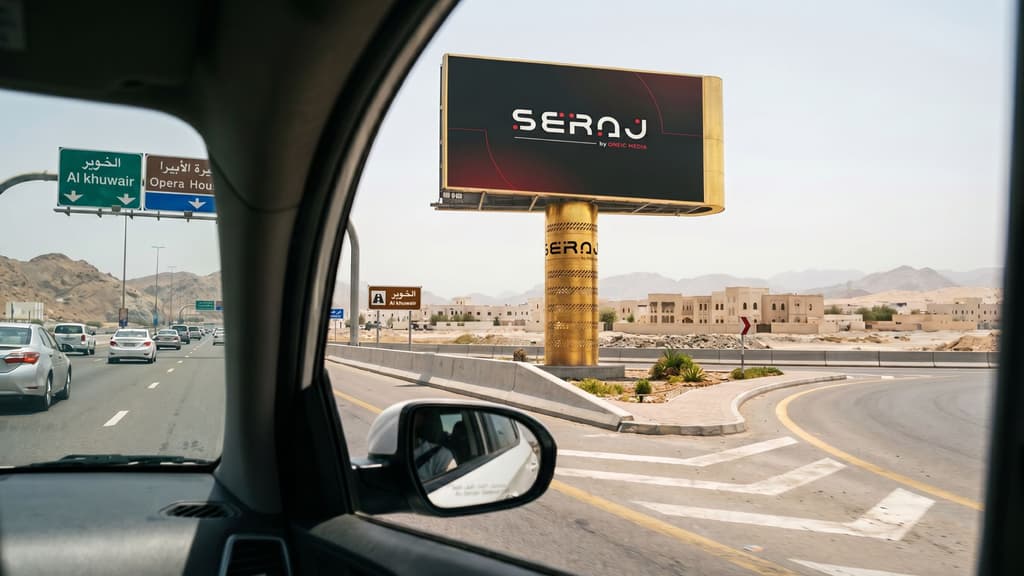
Seraj Media's network includes 350+ static and digital screens, 12+ megascreens, and coverage across key regional governorates in Oman. Its site also points to a wide mix of placements, from rooftop and wallscape screens to mupi, megacomm, unipole, and bridge formats.
That kind of network helps a campaign stay visible across different routes and audience moments. It also gives brands more room to plan with purpose rather than chase random exposure.
Scale matters for another reason, too. It helps a campaign feel established. When a message appears in multiple high-traffic places, it builds familiarity faster. That is one reason outdoor media often supports brand leadership so well. It creates repeated public presence, and public presence builds confidence.
Local Relevance Makes the Message Stronger
Digital screens are most effective when they fit the market they serve. In Oman, that means honoring local identity, local routes, and local habits.
Seraj Media’s work is rooted in Omani identity, while leveraging trusted analytics and deep industry expertise to place outdoor media at expressways, high-traffic sites, and high-captive-audience locations nationwide.
That combination of local relevance and strategic placement makes the message feel credible rather than generic.
This is also why outdoor campaigns should be built with context in mind. A screen near a busy urban route speaks differently from a screen near a retail hub. A highway placement serves a different purpose than a mall placement.
Modern outdoor advertising works best when it respects those differences. The more closely the placement matches the audience, the more natural the campaign feels.
Measurement Keeps the Campaign Honest
A campaign should not be judged solely by how impressive it looks. It should be judged by what it moves.
Geopath's measurement language centers on impressions, reach, frequency, and audience delivery. That gives planners a practical way to evaluate how well a campaign is working. The real value of digital screens becomes apparent when visibility translates into measurable public engagement and business response.
That is the standard modern outdoor campaigns should meet.
Good measurement also protects the budget. It helps brands place money where it can do the most work. It shows which routes carry strength. It shows which placements deserve repeat investment. And it helps a campaign improve over time, rather than starting from zero every season.
That is one reason digital screens have become central to serious outdoor planning. They are not just visually strong. They are easier to fit into a performance mindset.
Conclusion
Digital screens now play a central role in outdoor advertising because they combine visibility, flexibility, and scale. They help brands stand out in busy places. They support faster response. They also fit the way people move between public spaces and digital action.
In Oman, Seraj Media brings that approach to life through a premium OOH and DOOH network built for strategic placements, local relevance, and measurable reach. For brands that want to be seen with clarity and confidence, that matters.