
MUPI vs Billboard Advertising: Which Outdoor Format Delivers Better Results?
Intro
Outdoor advertising is still one of the most reliable ways to reach people as they move through their day. Driving to work, walking through a shopping district, waiting for a bus — outdoor ads catch people in the moments where they're already out and about, which is exactly what makes them stick.
MUPIs and billboards are the two formats that dominate that space. Both build brand awareness and support marketing campaigns, but they go about it in very different ways. Knowing what each does well makes it a lot easier to pick the one that'll actually move the needle for your business.
Here's how MUPI and billboard advertising stack up, when each format shines, and how to figure out which one fits your campaign.
What Is MUPI Advertising?
MUPI stands for Mobilier Urbain Pour l'Information — basically street furniture built for advertising, and you'll find it all over busy urban areas. Sidewalks, bus stops, outside malls, business districts, tourist spots — that's MUPI territory.
Unlike a huge roadside billboard, MUPIs are built for people who are on foot or standing nearby. Because viewers are right up close, they've got more time to actually take in the design and read the message.
They come in both static and digital versions. Digital MUPIs can rotate through several ads, run animations, or push time-sensitive messages — which gives campaigns a lot more flexibility.
They work especially well for businesses trying to reach people in city centers where foot traffic is heavy.
What Is Billboard Advertising?
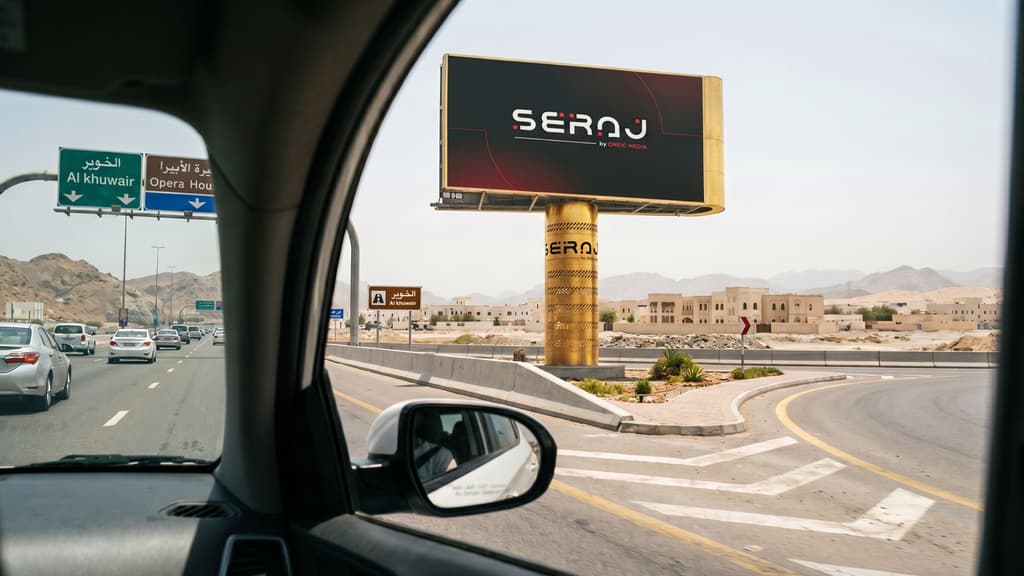
Billboards are probably the most recognizable form of outdoor advertising there is. They're the big structures along highways, main roads, city entrances, and busy commercial strips — seen by thousands of people every single day.
Their size is the whole point — grabbing attention fast, even from a long way off. Most people only catch a billboard for a couple of seconds while driving by, so the message has to be short, clear, and instantly memorable.
Billboards also come in traditional printed form and digital. Digital versions let advertisers rotate several messages throughout the day and swap content in and out much more easily.
They tend to be the go-to for campaigns aiming for maximum reach and strong visibility across a whole city or region.
MUPI vs Billboard Advertising: Key Differences
Both fall under "outdoor advertising," but they play to different strengths depending on what you're trying to achieve.
Size and Visibility
Size is the most obvious difference. Billboards are huge, visible from hundreds of meters out, which makes them great for catching drivers and passengers on busy roads.
MUPIs are smaller, but positioned much closer to the viewer. Instead of relying on size to win attention, they lean on proximity — since people are standing or walking right by them, they get more time to actually look.
Want maximum reach across a wide area? Billboards usually win that fight. Want closer, more detailed engagement in busy pedestrian zones? MUPIs are the better bet.
Audience Engagement
The way people interact with each format is pretty different too.
Someone walking past a MUPI often has several seconds — sometimes a couple of minutes — while waiting for a bus or crossing the street. That gives advertisers room to include more detail, promotions, or product info.
Billboards get glanced at for a second or two by people driving past, so the message has to land almost instantly.
Net result: MUPIs suit more informative campaigns, while billboards are better for a simple, memorable brand message.
Location Strategy
Where each format shows up matters a lot for how well it performs.
You'll typically find MUPIs in:
- Shopping streets
- Business districts
- Residential neighborhoods
- Public transport areas
- Tourist destinations
And billboards tend to sit along:
- Highways
- Major roads
- City entrances
- Commercial corridors
- High-traffic intersections
Which one's right really comes down to where your target audience actually spends their time.
Content and Creative Design
Because people spend more time looking at a MUPI, you can pack in extra info — product shots, promotions, QR codes, event details.
Billboards need a much simpler approach. Big visuals, a bold headline, minimal text — that's usually what performs best.
Each format really needs its own design thinking to work well.
Cost Considerations
Cost swings depending on location, how long the campaign runs, the size of the display, and whether it's static or digital.
Billboards in prime roadside spots usually cost more, since they deliver serious reach. MUPIs can be the more budget-friendly route if you're targeting a specific neighborhood or city center.
Rather than picking based on price alone, it's worth weighing what each format actually delivers toward your goals.
When Should You Choose MUPI Advertising?
MUPIs shine when you're trying to reach people in busy urban settings. Good fit for:
- Retail stores running seasonal offers
- Restaurants or cafés drawing in nearby customers
- Malls announcing special events
- Venues promoting concerts or exhibitions
- Tourism campaigns aimed at visitors
- Local businesses building neighborhood awareness
- Product launches in city centers
Since viewers are often right there, MUPIs can nudge people toward immediate action — walking into a nearby store, scanning a QR code for more info.
When Is Billboard Advertising the Better Choice?
Billboards make the most sense when the goal is broad visibility and reach. Common uses:
- National or regional brand awareness
- Major product launches
- Automotive advertising
- Real estate developments
- Government awareness campaigns
- Telecom companies
- Large retail brands
Reaching thousands of commuters every day is exactly what makes billboards so valuable for building lasting brand recognition.
Can MUPIs and Billboards Work Together?
Definitely. A lot of the strongest outdoor campaigns don't rely on just one format — they combine both.
A billboard might introduce a new product to drivers all across the city, building broad awareness. MUPIs near shopping centers or business districts can then reinforce that same message and pull customers toward a nearby store.
Running both creates multiple touchpoints throughout the customer's day. Someone might spot your billboard on their morning commute, then catch your MUPI later while walking through a shopping district.
That repeated exposure helps the message stick and makes it more likely they'll actually remember you.
An integrated approach usually beats leaning on a single format alone.
How to Choose the Right Outdoor Advertising Format
There's no one right answer in the MUPI vs billboard debate — it really depends on a handful of factors.
- Campaign objectives. Start with what you're actually trying to achieve — brand awareness, store visits, an event, a product launch. That goal should shape your format choice.
- Target audience. Think about who you want to reach. Drivers, office workers, tourists, shoppers, local residents — they all move through a city differently, and understanding that helps decide where your ads should go.
- Geographic coverage. Some campaigns only need one neighborhood; others need to cover a whole city or region. Billboards generally give you broader coverage, while MUPIs are stronger for local targeting.
- Budget. Every campaign has one. Rather than defaulting to whatever's cheapest, think about which format is actually more likely to deliver results. A smaller, well-targeted campaign can easily beat a bigger one placed in the wrong spots.
- Campaign duration. Short-term promotions often do well with well-placed MUPIs near retail spots, while long-term branding tends to benefit more from ongoing billboard exposure.
Why Location Matters More Than Format
As important as picking the right format is, location often matters even more.
A well-placed MUPI in a busy shopping street can outperform a billboard stuck somewhere with poor visibility. Just as easily, a billboard on one of the city's busiest roads can beat out several smaller displays scattered elsewhere.
Successful outdoor advertising really comes down to understanding where your audience spends time and putting your message exactly there. Traffic volume, foot traffic, visibility, nearby businesses, time of day — all of it shapes how a campaign performs.
Which is exactly why proper media planning matters so much when you're investing in outdoor advertising.
How SERAJ Media Helps You Choose the Right Outdoor Advertising Solution
Every campaign looks different, so choosing the right locations and formats takes real planning.
At SERAJ Media, we help businesses build outdoor campaigns that actually match their goals, audience, and budget. Whether you need premium MUPI spots in busy city centers or high-impact billboards along major roads, our team builds strategies designed to maximize visibility and performance.
We work with both static and digital outdoor options, so brands can reach audiences through whatever combination of formats works best. From planning and location selection through to execution, we manage the whole process to get you the strongest possible results.
With local market knowledge and access to prime outdoor locations across Oman, SERAJ Media helps businesses build stronger brand awareness and reach customers exactly where it counts.
Conclusion
There's no single winner in the MUPI vs billboard debate — each one brings something different depending on your goals, audience, location, and budget.
Want to engage pedestrians in busy urban areas? MUPIs give you excellent close-range, targeted communication. Need to reach large audiences along major roads and highways? Billboards offer visibility nothing else can match.
Often, the strongest results come from blending both into one integrated strategy.
With the right planning, creative work, and placement, outdoor advertising can be a genuinely powerful tool for building brand awareness and driving growth.
Partnering with an experienced team like SERAJ Media means you can put together the right mix of outdoor solutions and build campaigns that deliver real, measurable impact across Oman.