
Interactive Advertising and How It Is Changing Outdoor Media
Introduction
Interactive advertising is reshaping outdoor media by turning it from a static backdrop into a more active part of the message. It adds motion, timing, and relevance. It gives brands a better way to connect with people in the moment they pass by.
The shift is not only about screen technology. It is about how attention works in public space. Outdoor media now has to do more in less time. A board still needs to read fast. A screen still needs to hold the eye. But the message now works best when it feels timely, clear, and tied to its setting.
In this article, we will explore how interactive outdoor advertising works, the different formats brands are using, and how to apply it effectively to create stronger engagement and better campaign results.
What Interactive Advertising Really Means
At its core, interactive billboard advertising turns a one-way message into a more active experience. That does not always mean touchscreens or complex features.
In outdoor media, it can mean a digital board that changes over time, by location, or in response to campaign needs. It can mean an advertising display screen that shows motion, contrasts, and a stronger visual rhythm. It can also mean content that feels more relevant to the setting, rather than generic and static.
That matters because public attention is selective. People pass billboards while driving, walking, or shopping. They do not stop for every message. So the best creative has to earn a second look. It needs clean copy, bold design, and a clear promise. It also needs the right location.
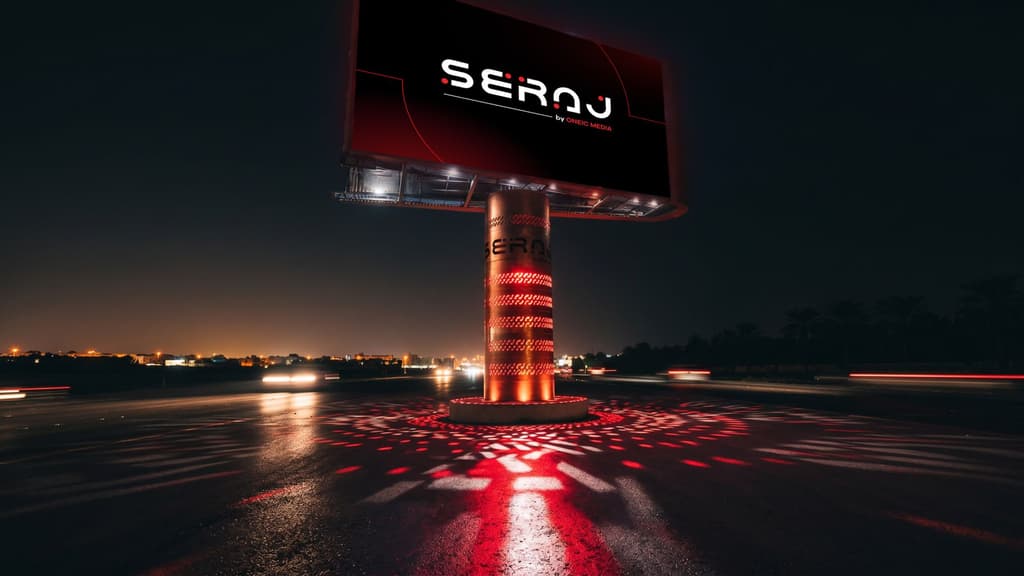
Seraj Media is built around that logic. It selects OOH locations based on brand goals, audience, and message.
Why the Shift to Interactive Advertising is Happening Now
A few market realities are pushing outdoor media in this direction.
- First, Oman is a connected market. NCSI’s population clock shows a population comprising both Omanis and expatriates, meaning campaigns speak to a broad, mixed audience. Its portal also puts mobile subscriptions front and center, a sign of the importance of digital connectivity in the country.
- Second, mobility still shapes daily life. Oman’s official data portal tracks roads executed, driving licenses, and new vehicle registrations. That matters for outdoor advertising, because movement creates visibility. People do not see outdoor media in just one place. They see it along routes, in city corridors, and near everyday destinations.
- Third, brands want more control. They want placements that feel planned, not random. They want campaigns that match the moment. Seraj Media’s network supports that need with a mix of static and digital formats, exclusive contracts across six key regional governorates, and a clear focus on high-traffic placements with strong visibility.
How Interactive Outdoor Media Changes the Creative Brief
This is where the work gets practical. Old-style outdoor copy often tried to say too much. Interactive outdoor media rewards the opposite. It works best when the message is short, sharp, and easy to absorb. The screen or board should do part of the work. The words should do the rest.
That means the creative brief has to change. Instead of asking for a long explanation, brands should ask for a message that can be understood in seconds. Instead of adding more copy, they should tighten the line. Instead of treating every placement the same, they should shape the message around the setting.
That approach aligns well with Seraj Media’s positioning. The company describes its network as premium, wide, and built for maximum reach. It also says it serves large brands, real estate developers, government entities, car dealerships, restaurants, shopping malls, and retail centers. That mix shows why flexible creative matters. Different sectors need different levels of urgency, clarity, and polish.
What a Strong Interactive Format Does Better
A good advertising display screen does more than show a logo. It gives the campaign rhythm. It can make the message feel current. It can support a launch, a seasonal push, or a brand reminder without changing the whole media plan.
That is one reason digital outdoor media is becoming more important within a broader OOH strategy. It is not replacing static formats. It is widening the toolkit. Static boards still bring scale and consistency. Digital screens bring motion and flexibility. Together, they let brands build presence in a way that feels more alive and more responsive.
Seraj Media already leans into that mix. Its site highlights large digital screens in Muscat and mentions DOOH locations in Nizwa, Sur, Ristaq, Ibra, and so on, and Al Hail 2. It also highlights new Unipole placements in its news updates, including one in Sur positioned along a key route with high daily traffic. That shows how location and format now work together.
Why Outdoor Media Still Holds Its Value
Even with more digital habits, outdoor media keeps a strong place in the media mix. The reason is simple. It meets people where they already are. It does not ask them to search. It does not ask them to click. It meets them in motion.
That is especially useful in Oman, where Seraj Media emphasizes broad coverage, exclusive regional governorate contracts, and prime billboard and screen locations. The company’s own language is built around visibility, reach, and market presence. That is the right frame for outdoor media today. The strongest placements do not just occupy space. They earn attention.
What Brands Should Look for Now
Brands planning interactive advertising should look for three things.
- They should look for placement quality. A screen or billboard only works when the site makes sense.
- They should look for message clarity. The copy has to be simple enough to read fast.
- They should look for a format fit. Some campaigns need scale. Some need motion. Some need both.
That is why strategic planning matters more than ever. The best outdoor campaigns are not built on volume alone. They are built on fit.
Seraj Media’s personalized approach and flexible terms support that kind of planning. Its network is designed to help brands choose placements that match their goals, audience, and message.
What this Means for the Market
The future of outdoor media is not just bigger. It is smarter.
Interactive formats are raising expectations. They are making brands think more carefully about timing, location, and creative structure. They are also making the public space feel more dynamic. A screen can now carry more than one message. It can shift with the campaign. It can support multiple goals. It can feel more relevant without becoming noisy.
That is a useful direction for Oman’s market. The country has a diverse population, strong mobility, and a government data ecosystem that closely tracks transport and national indicators. In that environment, outdoor media works best when it is visible, well-placed, and easy to understand.
Conclusion
Interactive billboard advertising is changing the way brands think about public visibility. It is making outdoor media more flexible, more responsive, and more strategic. It is also raising the standard for creative clarity. In that shift, the strongest players are the ones that combine scale with local understanding.
Seraj Media does that well. It combines a wide OOH network, static and digital formats, exclusive coverage across the governorate, and a clear focus on premium placements and audience fit.
For brands that want outdoor advertising to feel current and purposeful, that approach matters. Seraj Media helps place messages where attention is already moving and where visibility can work with strategy rather than against it.